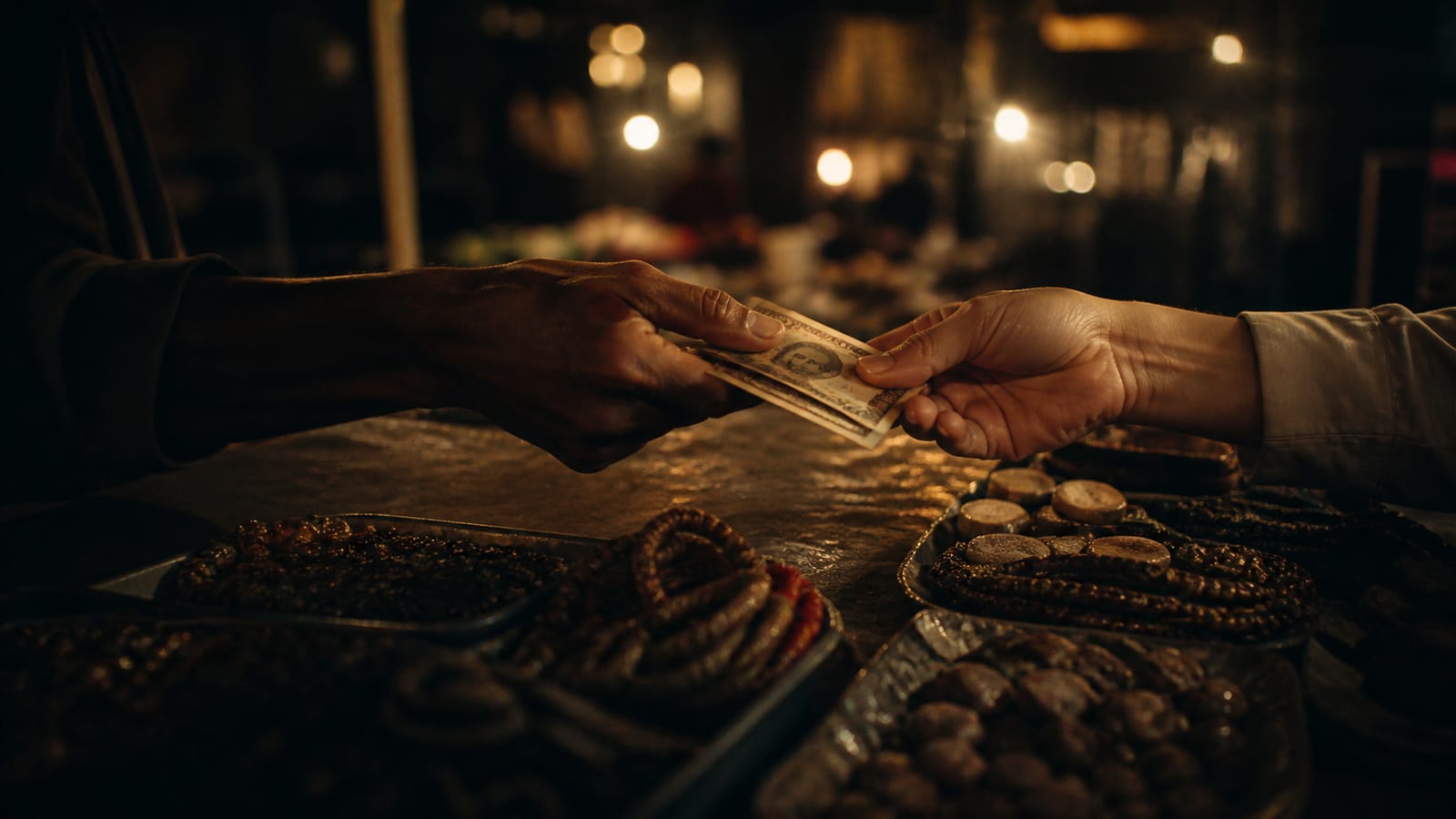
Travel scams are not random. They are operations: often professional, often organised, often running the same script in the same locations for years. The fake petitioner working Trafalgar Square is the cousin of the one working the Trevi Fountain and the one working Las Ramblas. The taxi driver running the broken meter routine in Bangkok is reading from the same playbook as the one in Rome.
This guide is the script.
Why scams are getting worse
Mastercard's 2025 fraud data showed travel-related fraud rising 18% during summer peak and 28% during winter peak – and these are just the cases that get reported. The FTC put US traveller losses to fraud at over $330m in 2024, with average losses of around $1,200 per victim. Two trends are driving the increase: AI is making fake booking sites and impersonation calls dramatically more convincing, and the post-pandemic travel boom has flooded tourist zones with inexperienced visitors who don't yet know the patterns.
The underlying scams haven't changed much, though. New skin, same skeleton.
The street scams: low-tech, high-volume
The fake petition. Someone (usually presenting as a charity worker, sometimes deaf or disabled) approaches with a clipboard and asks you to sign. While you read, an accomplice picks your pocket. Or the "petitioner" themselves does it. The tell: you didn't seek them out, and they're targeting an obvious tourist zone. The response: keep walking. Don't engage. Politeness is the vulnerability.
The shell game / three cups. A "casual" street game with a ball under one of three cups. Bystanders win convincingly. Then it's your turn. You lose. The bystanders are part of the operation. The tell: it exists. There are no honest versions of this game. The response: walk past.
The bracelet / friendship band. Someone ties a bracelet on your wrist "for free", then demands payment. The tell: they're approaching you, in a crowded tourist area, with something in their hands. The response: keep your hands in your pockets and don't slow down.
The spilled drink / mustard / bird droppings. Someone bumps into you, "accidentally" spills something on your jacket, then helps you clean up – while their accomplice takes your wallet. The tell: any unsolicited help with cleaning anything. The response: step away, check your pockets, do not let anyone touch you.
The fake police. Someone in plausible-looking uniform demands to see your passport, wallet, or "check for counterfeit currency". The tell: real police almost never approach tourists at random for document checks in tourist areas. The response: ask for ID, refuse to hand over your passport or wallet, insist on going to a police station. Real officers will agree. Fake ones will leave.
The transport scams: high-cost, high-frequency
The broken meter. "The meter is broken – it'll be 2,000 baht / 80 euros / however much they think you'll pay." The tell: the meter is "broken" the moment you, a tourist, get in. The response: insist on the meter, or get out and find a different car. Use ride-hailing apps where they exist.
The scenic route. The driver takes a long, indirect route to inflate the fare. The tell: you're going somewhere you've never been, which is exactly the leverage. The response: open Google Maps as soon as you get in. Make sure they see you doing it. The route corrects itself.
The fake Uber / fake taxi at the airport. Someone outside arrivals offers you a taxi, sometimes claiming to be your pre-booked Uber. The tell: real Uber drivers don't approach you. Real taxis are at marked ranks. The response: only get in cars from official ranks or via the app, and verify the licence plate before opening the door.
The "destination is closed". Driver tells you your hotel is full / the temple is closed / the area is under construction, then offers an alternative – which pays them commission. The tell: they "happen to know" a better option. The response: insist on going to your stated destination. If they refuse, get out.
The digital scams: high-volume, fast-evolving
Fake booking sites. Listings or websites that look identical to real ones (Booking.com clones, Airbnb clones, fake airline pages). You pay, then the property doesn't exist or is double-booked. Hong Kong reports 70% of travel scams falling into this category. The tell: prices that are 30%+ below market, urgency pressure, payment methods outside the platform (wire transfer, gift cards, crypto). The response: book only via apps you've verified, never via links from emails or social media ads, and pay only with credit cards that offer fraud protection.
Public Wi-Fi spoofing. A network called "Airport_Free_WiFi" that isn't run by the airport. Your traffic is monitored or your credentials are captured. The tell: networks that don't require any authentication and have generic names. The response: confirm the real network name with airport staff, use a VPN for anything sensitive, or use your own data instead.
ATM skimmers. A device fitted over the card reader of an ATM that captures your card details. Sometimes paired with a hidden camera capturing your PIN. The tell: loose-fitting card readers, anything that wiggles when you tug it, plastic that doesn't quite match the rest of the machine. The response: wiggle the card reader before inserting your card. Cover the keypad with your other hand. Use ATMs inside banks where possible.
AI-driven impersonation. New for 2025–26: scammers using AI to clone airline customer service voices, generate fake confirmation emails that pass spam filters, and build convincing chatbot-led scams on social media. The tell: anyone contacting you to ask for booking details, payment information, or "verification" you didn't initiate. The response: never act on inbound contact about a booking. Hang up, log into the airline or hotel directly, and verify there.
The five-second rule
Most scams have a tell that's visible within five seconds of contact. The petitioner is approaching you, not the other way around. The taxi meter is conveniently broken. The deal is implausibly cheap. The "police officer" is uncomfortable with your request to see ID. The "free" bracelet is being tied before you've agreed to anything.
The five-second rule: any time a stranger inserts themselves into your transaction in a tourist zone, assume scam until proven otherwise. The cost of being wrong is mild rudeness; the cost of being right is your wallet, your booking, or your trip.
What to do if it happens
Report to local police (you'll need the report for insurance claims), notify your bank and freeze any compromised cards immediately, and file with your home country's fraud authority (Action Fraud in the UK, FTC in the US). Most travellers don't bother. The ones who do recover dramatically more than the ones who don't.
The world has more honest people than scammers in it, by a very large margin. But the scammers cluster exactly where you're going, and they've been practising.