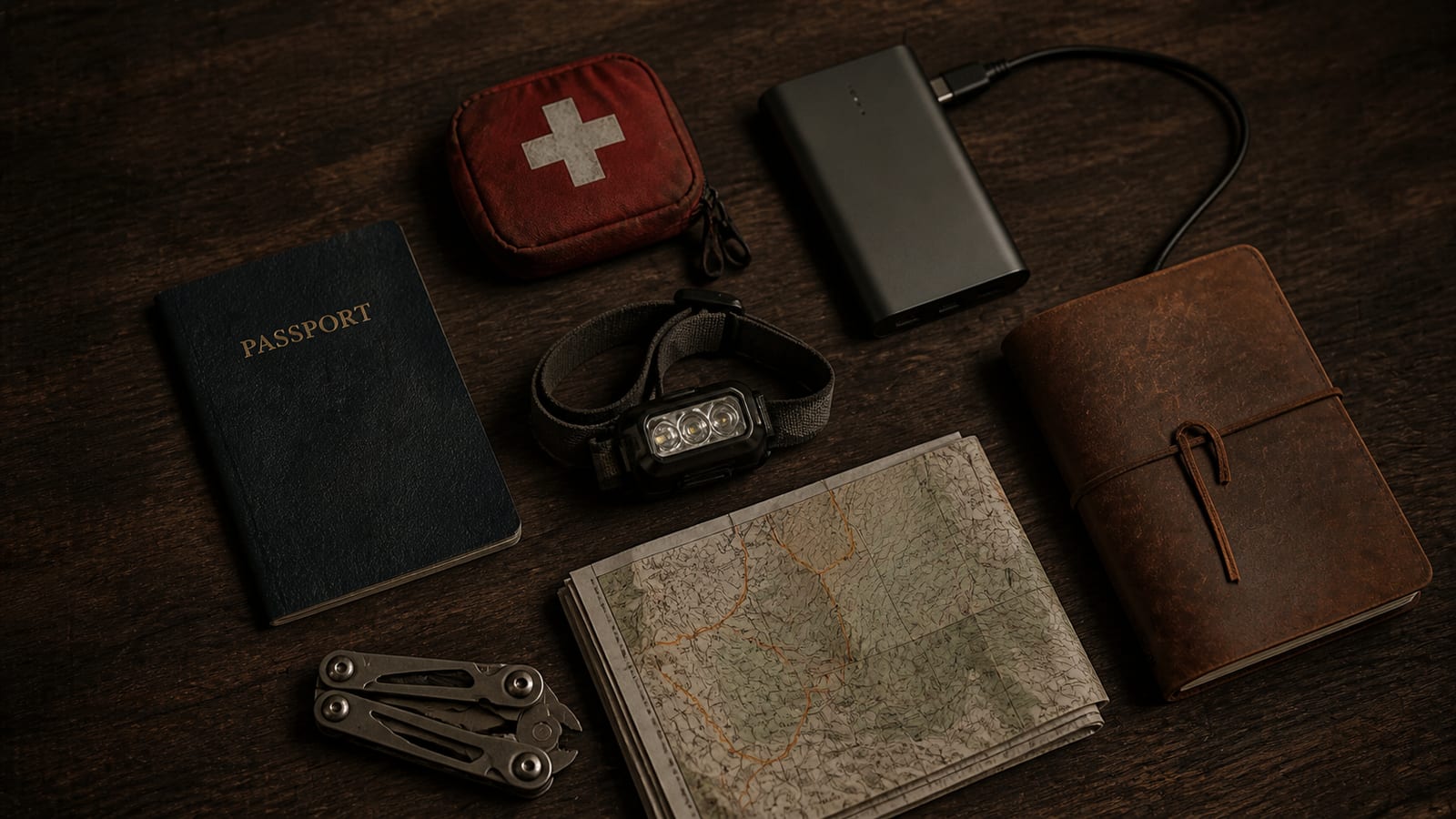
Most "travel safety essentials" lists are written by people who have never used the products on them. The result is the same dozen items recycled across every blog: a money belt no one wears, a whistle no one would hear, a "tactical pen" no one knows how to use.
Every item below is something that frequent travellers – diplomats, journalists, security professionals, people who travel 100+ days a year – actually carry. Each one earns its place by addressing a specific, common, real-world incident. Most cost under £20. All of them fit in carry-on.
1. A portable door lock (£10–15)
The single highest-leverage piece of safety kit you can pack. Wedges under any door or attaches to the strike plate, defeats almost every form of forced or surreptitious entry. Use it in hotels, hostels, and short-term rentals – every night, without exception. Brands like Addalock and Master Lock make versions that fit in any bag.
2. A door stop alarm (£8–12)
Pairs with the lock above. Battery-operated, slips under any door, sounds an ear-splitting alarm if the door is forced. Redundant on purpose: locks are about prevention, alarms are about waking you up if prevention fails.
3. A portable carbon monoxide alarm (£15–20)
Carbon monoxide poisoning has killed travellers in short-term rentals across at least a dozen countries in the past five years, including widely-reported cases in Mexico, Turkey, and Thailand. The alarm is the size of a deck of cards, lasts seven years on one battery, and sits on your bedside table. Non-negotiable for anywhere with gas appliances.
4. An RFID-blocking card sleeve (£5–10)
Forget the money belt. A single RFID sleeve for your contactless cards prevents skimming in crowded transport hubs and tourist zones. Tiny, cheap, no-effort. You don't need an RFID-blocking wallet – just sleeves for the cards that need protecting.
5. A high-capacity power bank (£25–40)
A flat phone is the single biggest safety failure point on any trip. A 20,000mAh power bank holds three to four full charges, fits in a day bag, and means you never have to choose between using GPS, taking photos, and being reachable. Anker and Nitecore are the reliable names; avoid no-brand units that fail or pose fire risks.
6. A spare phone or eSIM (variable)
If your primary phone is lost, stolen, or broken, what's plan B? Either a cheap unlocked Android (£60–80) kept in your luggage with a backup SIM, or an eSIM activated on your existing phone for redundant connectivity. Airalo and Holafly cover most countries for £10–20 per trip.
7. A first aid kit, properly stocked (£15–25)
Not the supermarket kit with 40 plasters. The actual kit: blister plasters, antiseptic wipes, painkillers (paracetamol and ibuprofen), antihistamines, anti-diarrhoeal (loperamide), oral rehydration salts, blister tape, tweezers, a thermometer, and any prescription medication doubled. Most travel medical incidents are mundane and entirely solvable with the contents of this bag.
8. A printed copy of every key document (free)
Passport photo page, visa, travel insurance policy and emergency number, embassy contact, two emergency contacts, photo of your luggage, and a printed itinerary. Kept separately from the originals. When phones fail or are stolen, paper still works. The five minutes spent printing this is the highest-return safety prep you'll do.
9. A neck wallet for travel days only (£10)
Worn under clothing on transit days – flights, trains, border crossings. Holds passport, primary card, and a small amount of cash. Not for daily wear (it's uncomfortable and announces itself), but invaluable for the high-pickpocket-risk windows of travel.
10. A door wedge / window alarm pack (£10)
For rooms where the windows are accessible from balconies, fire escapes, or adjacent buildings. The alarms are tiny magnetic units that stick to the window frame and sound when the window is opened. Belt and braces, but the cost-benefit is overwhelming for ground-floor or balcony-accessible accommodation.
11. A hidden camera detector (£20–30)
For travellers who use short-term rentals frequently. Detects RF signals from wireless cameras and IR LEDs from infrared cameras. Not necessary for every trip, but the price-to-peace-of-mind ratio is excellent if you're staying in Airbnbs more than a few times a year.
12. A real-time safety alert app (free–paid)
Country-level travel advisories update every few months. Real-time alert services update within minutes. The difference matters: in any incident – a terror attack, a natural disaster, civil unrest – the first 30 minutes is when most travellers are still trying to figure out what's happening. An alert that reaches you in five minutes instead of five hours is the difference between informed action and panic. Warnely (warnely.com) is what we built for exactly this; alternatives exist.
13. A water filter bottle (£25–35)
For travel in countries where tap water isn't reliable. A filter bottle (Grayl, LifeStraw) lets you drink from any tap or spring, eliminating the single most common cause of traveller illness. Pays for itself in saved bottled water within a week, and works during infrastructure outages where bottled water becomes scarce.
14. A small torch / head torch (£10–15)
Power cuts, hotel corridors at 3am, navigating rural areas at night, looking for things in your bag in the dark – all genuinely common, all genuinely solved by a £10 head torch. Petzl makes lightweight ones that fit in a pocket. Don't rely on your phone torch: it kills your battery and you'll need both hands.
15. A small bottle of universal disinfectant / wound wash (£3–5)
Cuts and grazes are mundane until they're infected, and infected wounds in tropical or subtropical climates can become serious in 48 hours. A small bottle of antiseptic spray and a roll of waterproof tape handles 95% of the relevant cases.
What to leave at home
Tactical pens. Personal alarms loud enough to summon a police response (most aren't). "TSA-approved" knives. Money belts (uncomfortable, obvious, replaced by neck wallets and door locks). Pepper spray (illegal in many countries, including most of Europe). Anything that looks like a weapon at security.
The principle
The right safety kit is small, cheap, and addresses the things that actually go wrong, not the dramatic scenarios that rarely affect real travellers. The list above fits in a single packing cube, costs around £150 in total, and covers more than 90% of the incidents that affect international travellers in any given year.