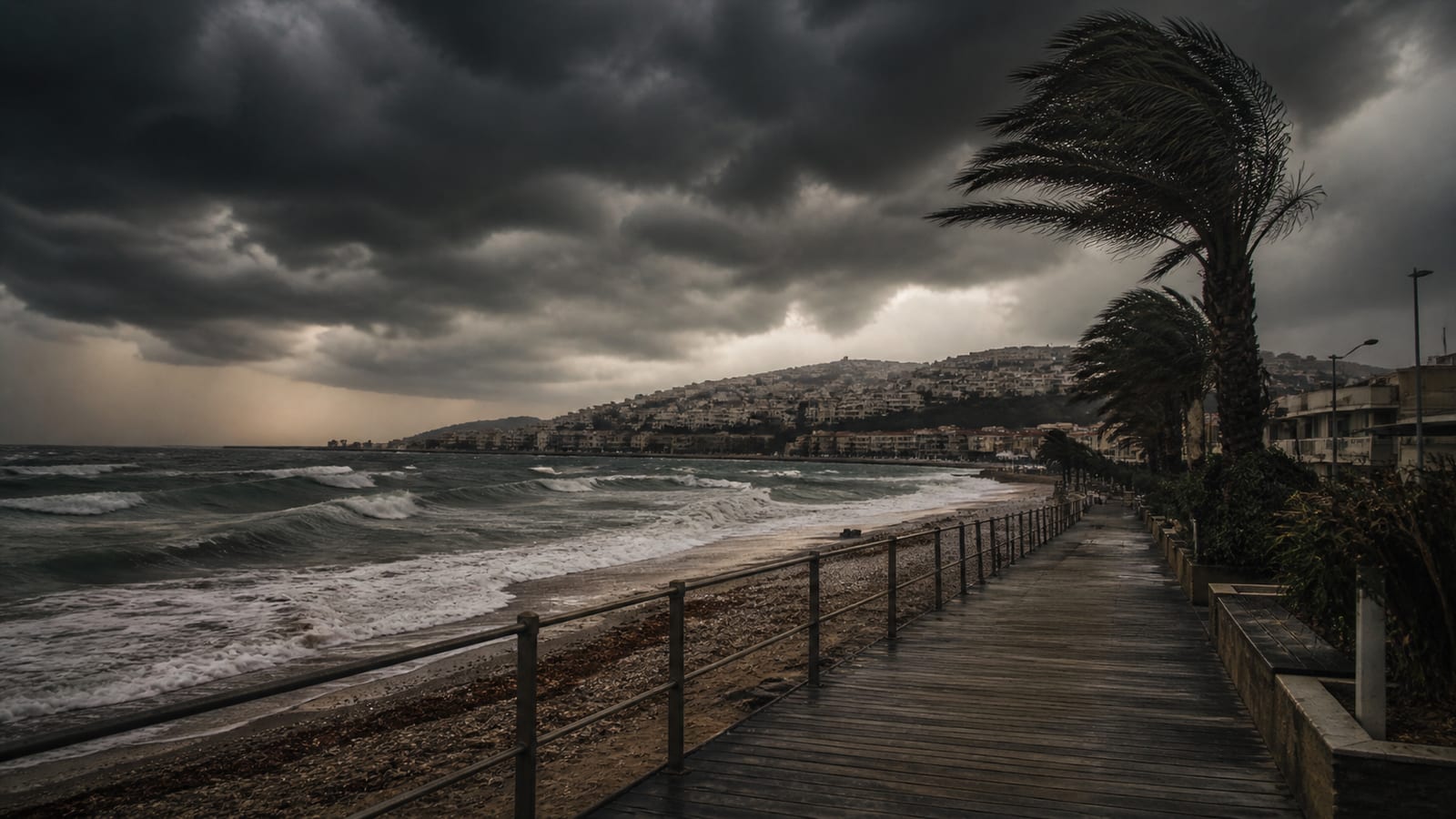
Most travellers will never experience a major natural disaster abroad. Of those who do, the overwhelming majority will be inconvenienced rather than harmed. But the gap between "fine" and "very much not fine" is almost always the first 10 minutes – what you do, where you go, and what you don't do. That gap closes with about 20 minutes of pre-trip reading.
Earthquakes
The most common serious natural disaster affecting travellers, and the one where instinct most often fails. Almost every earthquake death and serious injury comes from one of three causes: falling debris, building collapse, or running outside through the wrong door at the wrong time.
The 30 seconds during the shaking:
- If you're indoors, stay indoors. Drop to the floor, take cover under a sturdy desk or table, and hold on. The single most lethal mistake is running for an exit during the shaking – most injuries happen at doorways, on stairs, and from falling objects in corridors.
- If you're in bed, stay in bed. Pull a pillow over your head and turn away from windows. The mattress is reasonable cover; the floor next to the bed isn't always.
- If you're outdoors, move to open ground away from buildings, trees, streetlights, and power lines. Stay there until the shaking stops.
- If you're driving, pull over away from bridges, overpasses, and buildings. Stay in the car with the seatbelt on until it's over.
The hour after:
- Expect aftershocks. The first is usually the biggest, but a 7.0 can produce 6.0+ aftershocks for hours. Don't re-enter damaged buildings even briefly.
- Check for injuries – yours, your travelling companions', then immediate neighbours'. Don't move seriously injured people unless they're in obvious further danger.
- Stay off the phone unless it's an emergency. Networks are overloaded for hours after major quakes, and your call is competing with rescue coordination. Send a single text – they get through when calls don't.
- If you're near the coast and the quake was strong enough to make standing difficult, treat it as a tsunami warning and move to higher ground immediately, without waiting for an official alert.
Tsunamis
Tsunamis kill more travellers than earthquakes themselves in coastal regions, and the warning windows are short – sometimes minutes. The rules are blunt:
- The natural warning is the water receding from the beach. If you see this, you have one to ten minutes. Run, don't walk, to high ground or inland. Do not try to retrieve possessions, find others, or photograph the scene.
- Earthquake near the coast = tsunami risk. Don't wait for an official alert. Move to high ground and stay there for at least two hours.
- High ground means at least 30 metres of elevation, or two kilometres inland on flat ground. A hotel's third floor is not high ground.
- Tsunamis come in waves, not as a single event. The third or fourth wave is often the largest. The "all clear" must come from authorities, not from the sea looking calm.
Hurricanes, typhoons, and cyclones
Different names, same weather system. The good news: unlike earthquakes, you usually have days of warning. The mistake travellers make is assuming "days of warning" means "plenty of time to wait and see".
In the 72–48 hours before landfall:
- Decide whether to leave or stay. If your destination is a small island, a coastal area, or anywhere with a single road in and out, leave early. Airports close 24–48 hours before landfall, and the last flights are jammed.
- If you're staying, identify your shelter. A purpose-built hurricane shelter or a large concrete hotel is meaningfully safer than a small wooden building. Many hotels in hurricane regions have designated interior rooms – ask at reception.
- Stock 72 hours of water (4 litres per person per day), non-perishable food, a torch, batteries, a first aid kit, and any medications. Withdraw cash. Charge every device. Fill the bath as a backup water source.
In the 24 hours before landfall:
- Stay off the roads. Move all valuables and documents to interior rooms above ground level (but not the top floor, which loses roofs).
- Tape windows only if specifically advised by local authorities – the practice is increasingly considered unhelpful and in some cases harmful.
- Trust the evacuation orders. Tourists who "ride out" hurricanes against local advice account for a disproportionate number of fatalities.
During landfall: stay in your shelter. Don't go outside during the eye – the second half of the storm hits from the opposite direction and is often worse than the first.
Floods and flash floods
Flash floods kill more people in many countries than any other natural disaster, and they kill almost exclusively because people misjudge water depth and current. Six inches of moving water can knock an adult over. Two feet can carry a car downstream. The water always looks shallower than it is, and the current always feels stronger than it looks.
The rules:
- Don't drive through flooded roads. Turn around. Find another route. The phrase used by US emergency services – "turn around, don't drown" – exists because this is the single most common cause of flash flood deaths.
- Don't walk through flowing water above ankle depth. If you absolutely must, use a stick to test depth and stability ahead of you, and unbuckle any heavy bags so you can shed them.
- Move to high ground at the first warning, not the first sign of water. Flash floods can rise three metres in 15 minutes.
- After the flood, treat all standing water as contaminated. Sewage, chemicals, and pathogens spread through floodwater. Don't drink, swim in, or wade through it unless absolutely necessary.
Wildfires
The risk profile for wildfires has changed dramatically over the past decade. Regions that historically didn't burn – southern Europe, parts of the UK, Canada – now do, often suddenly and severely.
The early warning signs travellers miss: persistent smoke smell, smoke visible on the horizon, ash falling from the sky, sudden temperature drops with darkening sky, animals moving in unusual numbers in one direction. Any of these means leave the area now, not later.
If you're caught:
- Drive away from the fire if you can, with windows up and air conditioning on recirculate. Don't drive through smoke if you can't see the road.
- If you can't drive, find the largest cleared area available – a wide road, a parking lot, a body of water – and stay low.
- If you're in a building, close all windows and doors, fill the bath and sinks with water, and move to the central interior room. Houses survive wildfires more often than people think; the people who die are often the ones who left at the wrong moment.
Volcanoes
Most volcano-related travel incidents involve respiratory problems from ash and gas, not lava. Lava moves slowly enough to outwalk; ash and pyroclastic flows don't.
If a volcano in your area shows activity, leave the exclusion zone immediately and don't return for "one last look". If you can't leave:
- Stay indoors with windows closed and tape gaps if ash is falling.
- Wear an N95 or better mask outside; ash damages lungs quickly and permanently.
- Don't drive through ash without windscreen wipers off – wipers smear ash into a paste that scratches the glass and reduces visibility to nothing.
The pre-trip preparation that ties this together
Five minutes per disaster type, before you travel:
- Check the seasonal risk profile for your destination – hurricane season, monsoon season, wildfire season, seismic activity.
- Identify your accommodation's emergency procedures and shelter location.
- Know the local emergency number (it's not always 999 or 911).
- Set up a real-time alert service that pushes incident notifications, not just headlines. Earthquake early warning systems give seconds; tsunami warnings give minutes. The difference between getting them and not is whether you've installed and configured the relevant app before the trip.
- Save offline maps of your area, including evacuation routes if relevant.
Disasters rarely catch travellers because they were unprepared in some sophisticated way. They catch them because they were unprepared in predictable ways: no shelter plan, no offline map, no warning, no idea where higher ground was. Twenty minutes of preparation eliminates most of it.