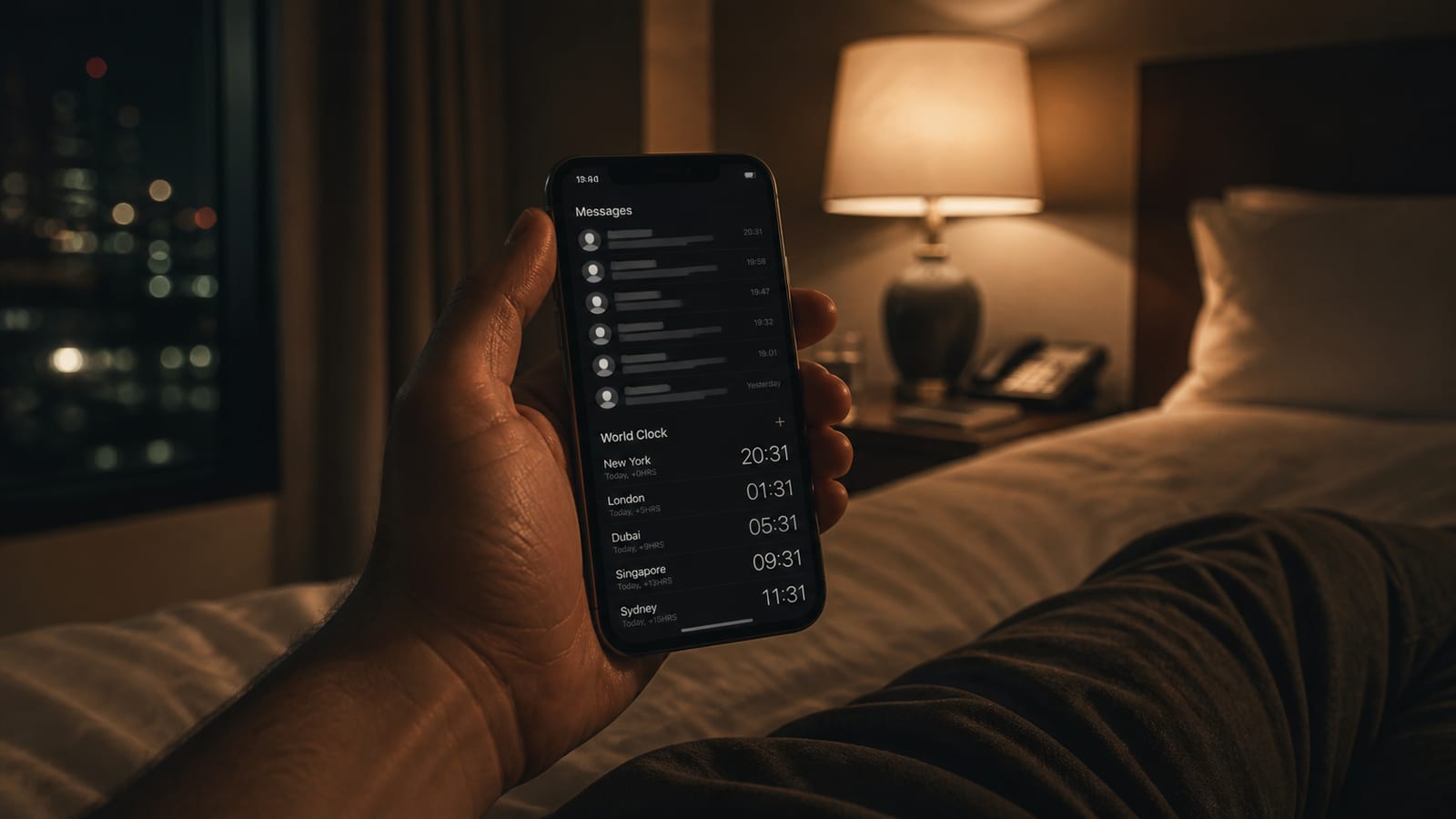
What happens next is almost always the same. They start trying to reach you. They flood your phone with messages, calls, voice notes. Some call your hotel. Some call your colleagues. Some call the embassy. They mean well and they're frightened, but in aggregate they create a second crisis on top of the first one, at the moment you need to be focused on yourself.
A communication plan, agreed before you leave, prevents most of this.
Why traditional communication fails in a crisis
In any serious incident, three things tend to happen at once:
- Cell networks degrade. Either because they've been damaged, because they're overloaded, or because authorities have throttled them deliberately.
- Social media becomes unreliable. Misinformation spreads faster than verified information, and platforms throttle posts from affected areas.
- Power and internet access become intermittent. Especially in natural disasters, but increasingly in political crises too.
This means the communication channels most families rely on – WhatsApp groups, Instagram updates, FaceTime – are precisely the channels most likely to fail when you need them most.
The plan: three components
1. A primary contact. One person back home – usually a partner, parent, or sibling – who acts as the hub. Everyone else in your network goes through them. This person doesn't need to be the closest to you emotionally; they need to be calm under pressure, organised, and reachable. They'll handle inbound queries, update other relatives, and coordinate with authorities if needed.
You contact one person. They contact everyone else. This single change reduces your communication load by 90% in a crisis.
2. A check-in protocol. Agree before you travel exactly how often you'll confirm you're safe, and what happens if you don't. Something like: "I'll send a one-line message every 12 hours. If you don't hear from me for 24 hours during a known incident, here's who you call." Specifics matter – vague agreements collapse the moment they're tested.
The check-in itself should be short. A single message – "I'm fine, in [city], will update tomorrow" – does the entire job. Long updates are a luxury for non-crisis times.
3. A backup channel. If your primary phone fails, what's plan B? Options include: a partner's phone with international roaming, a satellite messenger (Garmin inReach and similar devices are surprisingly affordable), a hotel landline, or an embassy welfare contact. The point is to have agreed in advance that if you go silent on the primary channel, the backup channel kicks in automatically – not after a frantic 12 hours of trying the first one.
What to put in the pre-departure email
Before you leave, send your primary contact a single email containing:
- Your full itinerary with dates, cities, and accommodation
- Photo of your passport
- Travel insurance policy number and emergency line
- Embassy registration confirmation
- A list of who else to inform if something goes wrong – and equally important, who not to inform
- Your check-in schedule and the protocol if you miss one
- Any medical information they'd need to give to a hospital
Most travellers never do this. The ones who do almost always say afterwards that it was the single most useful thing they prepared.
During a crisis: the discipline that matters
Once something has happened, the temptation is to broadcast – group chats, social media, replies to every concerned message. Resist it. Every message you send is battery and signal you may need later. Send one message to your primary contact. Let them handle the rest.
If you're using a real-time safety alert service, your primary contact can often see the same incident data you can. This means they're informed without you having to explain anything. The conversation becomes "I'm safe and in this location" rather than "let me tell you what's happening" – which is faster, calmer, and uses dramatically less bandwidth.
The principle
Communication in a crisis is about reducing load, not increasing it. Every channel, every contact, every update should make the situation simpler, not more complex. A plan agreed in advance – one primary contact, a clear check-in protocol, a backup channel, and a pre-departure information dump – does that.